





Besos Carts: Complete Product and Cartridge Technology Guide
Introduction to Besos Carts
besos carts is a product name associated with the cartridge category of the modern vaporizer market. To understand this product category, it helps to examine the hardware, construction, materials, packaging, labeling, and technology that define cartridge-based devices.
A cartridge is a compact component designed to hold a particular formulation within a dedicated device system. Its construction typically includes a reservoir, an internal heating element, a mouthpiece, and connection points. Each component serves a specific engineering purpose. Therefore, understanding the design provides useful information about product identification and hardware quality.
Moreover, cartridge technology has developed considerably over time. Manufacturers now use different reservoir materials, connection systems, heating components, and exterior designs. Consequently, consumers may encounter products that look similar but differ significantly in their construction and technical specifications.
Besos Carts can be discussed within this broader product category without assuming that every product carrying the name has identical specifications. Product details should always come from reliable manufacturer documentation and verified packaging information.
Understanding the Besos Carts Product Category
The cartridge market includes several types of compact hardware. Although their external appearance may be similar, their internal components can vary.

besos carts
A typical cartridge assembly includes several important elements:
-
Reservoir: The internal chamber that contains the cartridge formulation.
-
Housing: The exterior structure that protects internal components.
-
Mouthpiece: The upper section designed as the device’s contact point.
-
Heating assembly: The internal electrical component responsible for generating heat.
-
Connection system: The interface between the cartridge and compatible hardware.
-
Packaging: The external material that protects the product and displays identification information.
Each component contributes to the overall construction. However, the presence of these components does not automatically establish product authenticity or manufacturing quality.
For this reason, product descriptions should distinguish between confirmed specifications and general cartridge technology.
Cartridge Construction and Hardware Design
Hardware construction remains an important part of cartridge identification. In particular, the materials used in the exterior housing can influence durability, appearance, and resistance to ordinary handling.
Some cartridge designs use transparent sections that allow the internal reservoir to remain visible. Others feature opaque housings that conceal the internal assembly.
Additionally, exterior finishes can differ according to the manufacturer. Common design approaches include:
-
Minimalist exterior finishes.
-
Transparent reservoir sections.
-
Printed identification labels.
-
Compact cylindrical housings.
-
Protective exterior sleeves.
-
Distinctive product branding.
Nevertheless, appearance alone cannot establish the quality of the internal assembly. A professionally printed label does not necessarily indicate reliable manufacturing standards.
Therefore, product verification should involve more than visual inspection.
Understanding Cartridge Components
Reservoir Construction
The reservoir represents one of the central structural components of cartridge hardware. It provides an enclosed space for the material contained inside the product.
Manufacturers may use different materials and construction methods when producing reservoirs. These differences can influence transparency, structural strength, and resistance to material degradation.
Furthermore, reservoir design should account for compatibility with the intended internal assembly. Poorly documented materials can create uncertainty about product integrity.
besos carts
Mouthpiece Design
The mouthpiece forms the upper exterior section of a cartridge. Its shape, material, and attachment method vary across different product designs.
Some products feature compact mouthpieces, while others use wider exterior structures. These differences are primarily related to industrial design and manufacturing choices.
Importantly, the material used in a mouthpiece should be identified through reliable specifications rather than assumptions based on appearance.
Exterior Housing
The housing protects the internal cartridge components. It may also carry the product’s printed branding and identification details.
In addition, exterior construction can influence how easily a cartridge can be identified during inspection.
However, a strong exterior appearance does not guarantee that the internal materials meet appropriate quality standards.
Product Identification and Authenticity
Authenticity is an important consideration when examining branded cartridge products.
Counterfeit products can imitate established packaging styles, logos, colors, and product names. As a result, visual similarities should not be treated as proof of authenticity.
A responsible product identification process should consider several details.
Manufacturer information: Look for a clearly identified manufacturer or responsible distributor.
Batch identification: Where applicable, batch numbers can help connect individual products with manufacturing records.
Product labeling: Labels should provide accurate product information and identify relevant ingredients or contents where required by law.
Laboratory documentation: Independent testing records can help establish whether a product has undergone appropriate quality checks.
Packaging consistency: Compare packaging information with official manufacturer documentation rather than relying exclusively on photographs.
Furthermore, QR codes and verification labels should lead to legitimate manufacturer-controlled information. A QR code by itself does not prove that a product is genuine.
besos carts
Packaging and Presentation
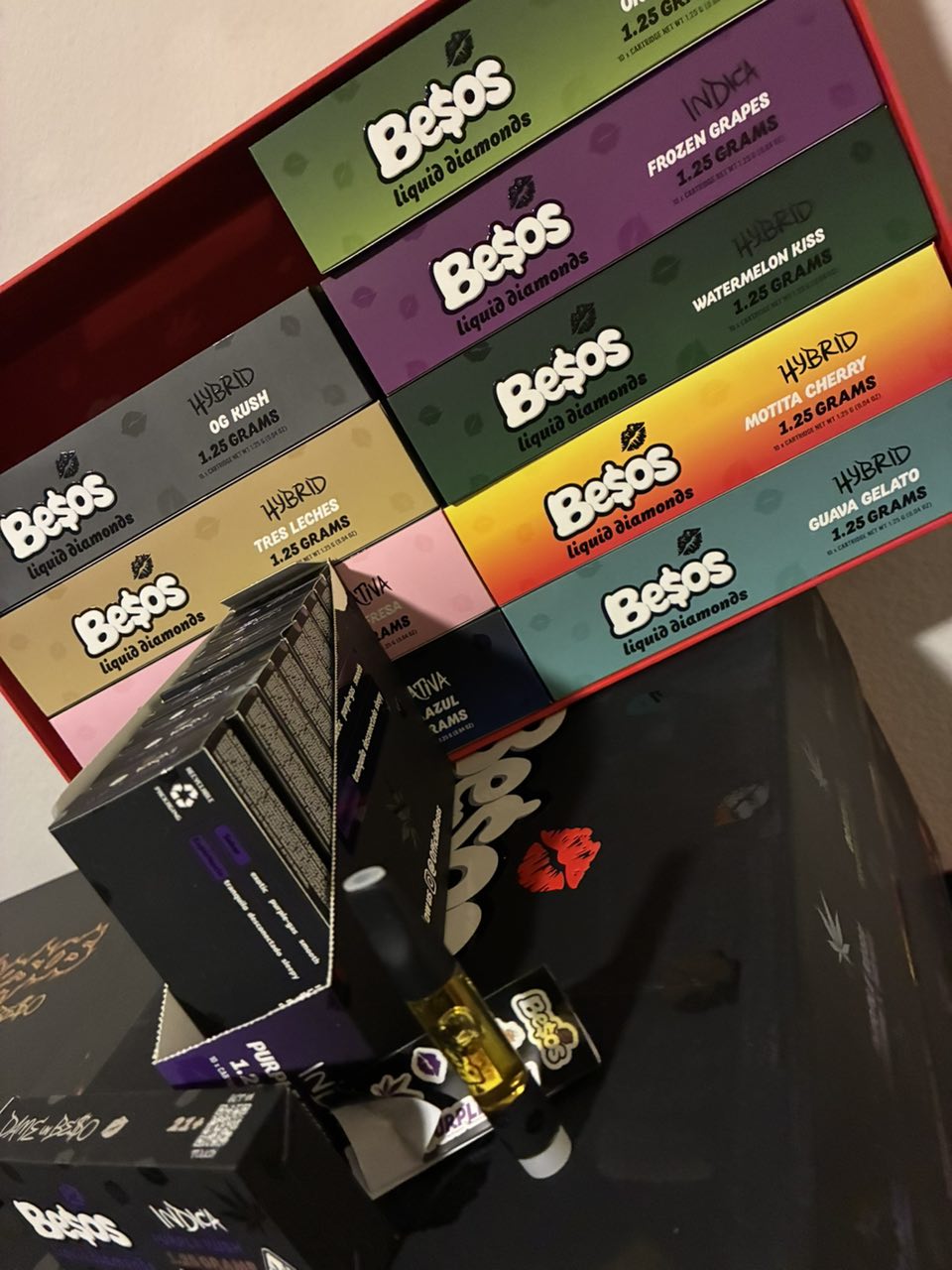
Packaging serves several purposes within the cartridge market. First, it protects the enclosed product during distribution. Second, it communicates identification information. Finally, it helps distinguish one product series from another.
Besos-branded packaging should be assessed using the information actually displayed on the packaging.
Important packaging elements include:
-
Product identification.
-
Manufacturer or distributor details.
-
Batch or lot information.
-
Relevant ingredient declarations.
-
Applicable safety warnings.
-
Storage instructions.
-
Regulatory information.
-
Tamper-evident features where required.
Moreover, packaging should remain consistent with applicable regulations in the market where the product is distributed.
An attractive exterior design should never replace accurate labeling or reliable product documentation.
Manufacturing Quality and Material Standards
Manufacturing quality involves more than the appearance of a finished cartridge.
A properly documented production process should account for material selection, component consistency, assembly procedures, packaging standards, and quality-control records.
For example, manufacturers should be able to identify the materials used in reservoir construction and explain the specifications of the internal electrical components.
Similarly, quality-control procedures should identify manufacturing defects before products enter distribution.
These procedures may include:
-
Component inspection.
-
Material documentation.
-
Assembly verification.
-
Packaging inspections.
-
Batch record management.
-
Product traceability.
-
Independent laboratory testing where appropriate.
In addition, manufacturers should maintain clear records that allow products to be traced through the supply chain.
Without these records, consumers and distributors may have difficulty determining whether a particular product meets the manufacturer’s stated standards.
Understanding Cartridge Technology
Cartridge technology combines several mechanical and electrical components within a compact structure.
The electrical connection allows compatible hardware to communicate with the cartridge assembly. Meanwhile, the heating component represents a separate internal system.
Different manufacturers may use different component arrangements. Therefore, cartridge compatibility should always be established through documented technical specifications.
It is also important to distinguish between the appearance of a cartridge and its actual engineering properties.
For example, two cartridges may share a similar exterior shape but use different internal materials and connection arrangements.
Consequently, product comparisons should rely on verified information rather than photographs alone.
Product Storage and Packaging Integrity
Storage conditions can affect the condition of packaged products and their materials.
For general product preservation, manufacturers should provide clear storage instructions. These instructions should explain the environmental conditions recommended for maintaining packaging and component integrity.
In particular, products should remain within their specified storage conditions.
Packaging should also be protected from unnecessary physical damage, moisture exposure, and contamination.
If a cartridge appears cracked, leaking, damaged, or improperly sealed, its condition should be assessed rather than assumed to be acceptable.
Additionally, products with missing identification information or questionable packaging should not be treated as verified items.
Understanding Product Labels
Product labels provide important information about the identity and composition of a product.
A complete label may include:
-
Brand or product name.
-
Manufacturer identification.
-
Product category.
-
Batch number.
-
Manufacturing information.
-
Ingredient information.
-
Relevant warnings.
-
Storage information.
-
Regulatory declarations.
However, the information required varies between jurisdictions and product categories.
For products containing regulated substances, applicable local laws should be followed. A product should not be assumed to be lawful merely because it has professional packaging or a recognizable brand name.
Product Documentation and Laboratory Testing
Documentation provides a more reliable basis for product assessment than branding alone.
Independent laboratory reports, when applicable, may contain information about product composition, contaminants, and testing procedures.
However, laboratory documentation should be checked carefully.
A useful report should identify the tested sample, laboratory, testing date, and relevant analytical methods.
Furthermore, batch information should correspond to the actual product being examined.
A report for another batch does not automatically establish the quality of the product in question.
This distinction is especially important in markets where product packaging and branding may be copied.
Common Cartridge Quality Concerns
Several issues may arise during the manufacture, packaging, or distribution of cartridge products.
Packaging Damage
Damaged packaging may affect product identification and protection. Therefore, compromised packaging should be investigated.
Missing Information
Products without adequate manufacturer or batch information can be difficult to verify.
Inconsistent Branding
Differences in logos, printed details, or product names may indicate packaging variations or possible imitation.
Unclear Composition
When ingredient information is unavailable, the contents cannot be reliably established from appearance.
Unverified Testing Claims
Laboratory claims should be supported by authentic, traceable documentation.
Ultimately, product quality requires evidence. Marketing language cannot replace manufacturing records, accurate labeling, and appropriate testing.
Besos Carts and the Wider Cartridge Market
The cartridge market includes numerous product formats and hardware designs.
Some manufacturers focus on compact construction, while others emphasize exterior presentation, material transparency, or distinctive packaging.
Nevertheless, the same basic evaluation principles apply across the category.
A useful product comparison should consider:
-
Verified manufacturer identity.
-
Documented component materials.
-
Accurate product labeling.
-
Manufacturing traceability.
-
Packaging integrity.
-
Applicable regulatory compliance.
-
Independent testing documentation.
Moreover, these factors provide a more meaningful comparison than promotional claims.
The Besos name should therefore be evaluated using reliable product-specific evidence rather than assumptions about specifications shared by unrelated cartridge products.
Frequently Asked Questions About Besos Carts
What are Besos Carts?
Besos Carts is a product name associated with cartridge-style products. Specific details about the manufacturer, formulation, hardware, and available product versions should be confirmed through reliable documentation.
What components are found in cartridge hardware?
Typical cartridge assemblies contain a reservoir, exterior housing, mouthpiece, internal heating component, and connection system. However, individual designs can differ.
How can product authenticity be checked?
Authenticity should be assessed using manufacturer records, batch information, official verification systems, and reliable documentation.
Does packaging establish product quality?
No. Packaging can communicate important information, but appearance alone cannot establish the quality or composition of a product.
Why is batch information important?
Batch information helps connect an individual product with manufacturing and quality-control records.
Are all cartridge designs compatible?
No. Compatibility depends on the documented connection system and hardware specifications.
Why should ingredient information be checked?
Ingredient information helps establish what a product contains. Unclear or missing declarations create uncertainty about its composition.
What should be considered when examining cartridge materials?
Relevant considerations include material identification, manufacturing documentation, structural integrity, and appropriate quality testing.
Why is independent laboratory documentation useful?
Independent testing can provide evidence about composition and certain quality parameters. However, reports must correspond to the actual product and batch.
How should packaged products be stored?
Follow the manufacturer’s documented storage instructions and applicable safety requirements. Products with damaged or compromised packaging should be assessed before any further handling.
Responsible Product Information and Regulatory Awareness
Products associated with regulated substances require particular attention to legal and safety requirements.
Regulations differ between countries and may address manufacturing, distribution, labeling, possession, and sales.
Therefore, businesses should verify the applicable rules before listing or distributing these products.
Furthermore, accurate product descriptions should avoid unsupported medical claims, misleading potency statements, and unverified laboratory certifications.
Clear documentation benefits manufacturers, distributors, retailers, and consumers alike.
Understanding Besos Carts Through Product Information
Besos Carts can be examined through the wider technical framework of cartridge construction, product identification, manufacturing standards, packaging, and documentation.
Although branding and exterior presentation can make products recognizable, they do not independently establish authenticity or quality.
Instead, reliable assessment depends on verified manufacturer information, traceable batch records, accurate labeling, documented materials, and appropriate independent testing.
The Importance of Design Consistency in Besos Carts
Design consistency is an important consideration when examining branded cartridge products. A recognizable product identity can help distinguish one manufacturer from another. However, consistent branding should also be supported by accurate technical information and reliable manufacturing documentation.
Besos Carts can be examined through several design-related characteristics, including exterior construction, component arrangement, packaging presentation, and product identification.
In particular, manufacturers should maintain consistency between product labels and official product records. This makes it easier to identify individual product versions and distinguish legitimate packaging from imitations.
Furthermore, design consistency can help distributors organize product information. When product names, batch references, and packaging details remain accurate, inventory management becomes more straightforward.
A professional product presentation should therefore combine clear identification with transparent documentation.
Cartridge Materials and Component Durability
Materials play an important role in the construction of cartridge hardware. Different materials offer different structural characteristics, and manufacturers must consider these differences during product development.
For example, exterior housing materials should provide suitable protection for the internal assembly. Similarly, reservoir materials should be identified through reliable manufacturing specifications.
Several material-related considerations deserve attention:
-
Structural stability.
-
Resistance to ordinary physical damage.
-
Compatibility between internal components.
-
Material identification.
-
Manufacturing consistency.
-
Appropriate quality-control procedures.
Additionally, manufacturers should maintain records identifying the materials used in their products.
This information is particularly important when evaluating products with limited technical documentation.
A cartridge’s external appearance cannot establish the composition of its internal components. Consequently, material claims should always be supported by manufacturer specifications.
Understanding Product Variations
Branded cartridge products may appear in different packaging formats or product versions. These variations can result from manufacturing updates, packaging changes, or differences between product categories.
However, consumers should not assume that two products are identical simply because they share a brand name.
Product variations should be documented accurately.
For example, a manufacturer may introduce a revised exterior housing while retaining the same general product category. Alternatively, a different product version may contain an entirely different internal assembly.
Therefore, product descriptions should clearly distinguish between confirmed changes and unverified marketing claims.
This approach also improves online product information because visitors can understand what is known about a particular version without encountering misleading specifications.
Supply Chain Transparency
Supply chain transparency helps establish where products originate and how they move through distribution channels.
For branded cartridge products, traceability can support product identification and quality management.
A transparent supply chain should provide information about:
-
The responsible manufacturer.
-
Authorized distributors.
-
Product batch references.
-
Relevant testing documentation.
-
Packaging records.
-
Distribution information.
Moreover, reliable records help businesses investigate product complaints and identify potentially problematic batches.
Without proper traceability, identifying the source of a product can become difficult.
For this reason, responsible distributors should maintain accurate purchasing and inventory documentation.
Digital Product Verification
Digital verification systems have become increasingly common across different consumer-product categories.
These systems may include QR codes, batch lookup pages, manufacturer websites, and digital documentation.
When implemented correctly, they can make product information easier to access.
However, digital verification should be approached carefully. A QR code can be copied, and a professional-looking website does not automatically establish a manufacturer’s legitimacy.
A reliable verification process should connect the product with a legitimate manufacturer-controlled record.
Additionally, the displayed batch information should match the physical packaging.
Digital records should provide useful information rather than simply redirecting visitors to promotional pages.
Product Information for Online Retail Websites
Online product descriptions should communicate relevant information clearly and accurately.
For a product listing involving Besos Carts, the content should identify the product category while avoiding unsupported technical specifications.
An effective information structure may include:
Product identification: Clearly state the product name and category.
Hardware information: Describe only components confirmed by manufacturer documentation.
Packaging details: Explain the available identification and packaging information.
Verification information: Provide access to legitimate product documentation where available.
Safety information: Include relevant warnings and applicable regulatory requirements.
Furthermore, website owners should avoid publishing invented specifications merely to increase the length of a product page.
Accurate information builds credibility and supports better customer understanding.
Frequently Overlooked Details When Evaluating Cartridge Products
Several details can be overlooked when people examine branded cartridge products.
First, packaging and internal hardware represent different aspects of product quality. A visually attractive exterior does not establish the quality of the internal assembly.
Second, product names do not necessarily identify the manufacturer. A brand name should be connected with verifiable business information.
Third, laboratory documentation must correspond to the actual product being examined.
Finally, regulatory requirements can vary significantly between markets.
These details demonstrate why product assessment should involve documentation rather than appearance alone.
Building a Reliable Product Information Record
A structured product information record can help retailers and distributors maintain accurate descriptions.
For Besos Carts, a record should contain only information supported by reliable sources.
Useful information includes:
-
Confirmed product name.
-
Manufacturer identification.
-
Product category.
-
Documented hardware materials.
-
Packaging information.
-
Batch identification.
-
Relevant laboratory documentation.
-
Applicable safety warnings.
-
Regulatory information.
In addition, records should be updated whenever the manufacturer introduces a verified product change.
This prevents outdated descriptions from remaining online and reduces confusion between different product versions.
besos carts besos carts besos carts besos carts besos carts besos carts besos carts besos carts besos carts besos carts besos carts besos carts besos carts besos carts besos carts besos carts besos carts besos carts
Final Thoughts on Cartridge Product Technology
Cartridge technology combines material engineering, compact hardware construction, product identification, and manufacturing procedures.
Although different brands may use distinctive exterior designs, the fundamental principles of product evaluation remain similar.
besos carts besos carts besos carts besos carts besos carts besos carts besos carts besos carts besos carts besos carts besos carts besos carts besos carts besos carts besos carts besos carts besos carts besos carts
Reliable documentation, transparent labeling, and appropriate quality-control systems provide a stronger foundation for understanding a product than promotional claims.
For Besos Carts, confirmed manufacturer information remains essential when discussing specific specifications, materials, product versions, or packaging characteristics.













Reviews
There are no reviews yet.